
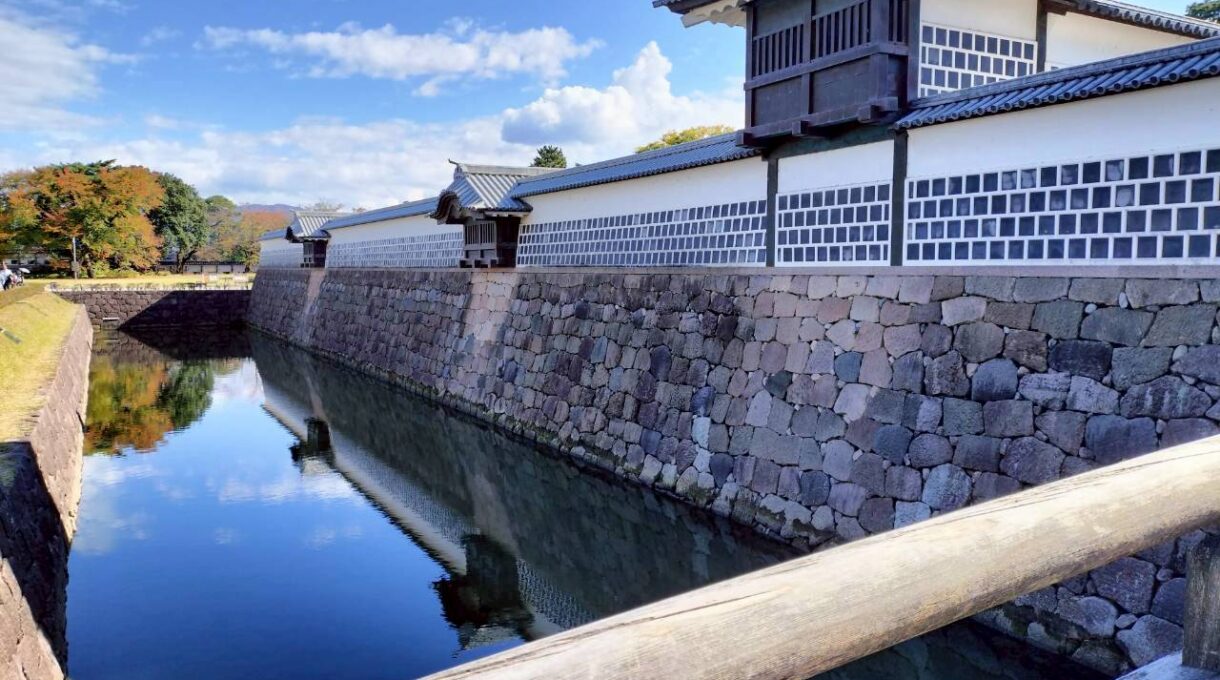
Kanazawa Castle is a historic castle site located in the heart of Kanazawa City, Ishikawa Prefecture.
From the early 1600s to around the 1800s, it served as the residence of the Maeda family, who ruled the Kaga Domain, an area covering most of present-day Ishikawa and Toyama prefectures.
One of the castle’s main highlights is its stone walls, built using different styles and stone shapes across various periods. As you walk around and compare them, you can feel how the castle’s history has evolved over time.
The castle is also located close to Kenrokuen Garden, one of Japan’s most famous traditional gardens, and the 21st Century Museum of Contemporary Art, making it an excellent stop when sightseeing in Kanazawa.
How to Get to Kanazawa Castle
Address:1-1 Marunouchi, Kanazawa City, Ishikawa Prefecture (View on Google Maps)
Getting to Kanazawa Station
Kanazawa Station is the nearest major station.
Below are the main routes from Osaka and Tokyo.
From Shin-Osaka Station to Kanazawa Station
-
JR Limited Express “Thunderbird” (direct train)
-
Travel time: About 2 hours 30–40 minutes
-
One-way fare: Approximately ¥7,000–¥9,200
(Price varies depending on seat type and transfers)
From Tokyo Station to Kanazawa Station
-
Hokuriku Shinkansen “Kagayaki”
-
Travel time: About 2 hours 30 minutes
-
One-way fare: Approximately ¥14,000–¥15,000
Stop by Tsuzumi-mon Gate (Optional)
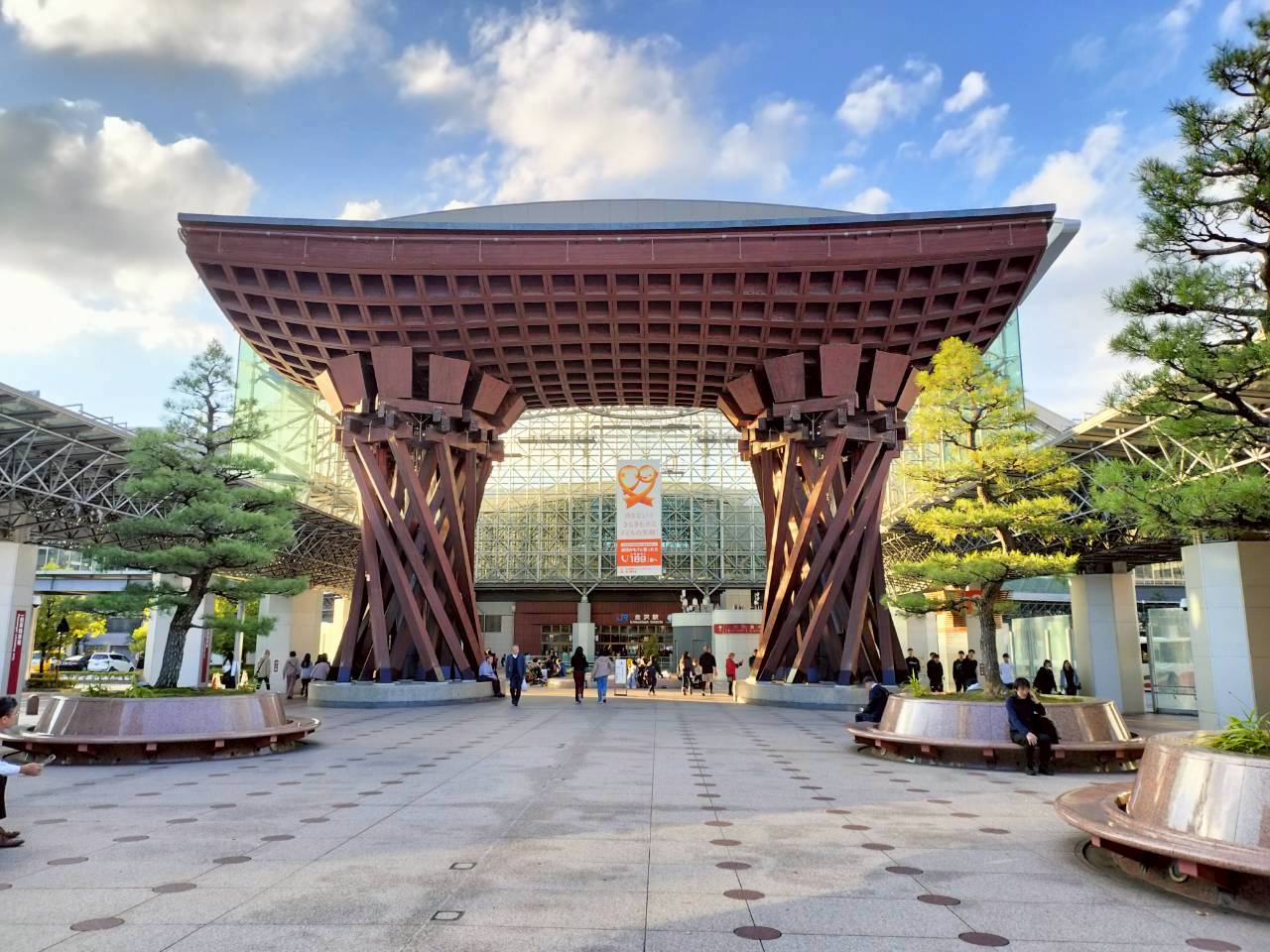
If you have some extra time after arriving at Kanazawa Station, we recommend stopping by Tsuzumi-mon Gate, the station’s iconic landmark.
Located just outside the East Exit, this large wooden gate is inspired by the tsuzumi, a traditional drum used in Kaga Hosho Noh theater.
Its warm wooden design represents the meeting of Kanazawa’s traditional culture and modern cityscape, and it is a very popular photo spot for visitors.
From Kanazawa Station to Kanazawa Castle
From Kanazawa Station, you can reach Kanazawa Castle by bus or on foot.
By Bus (Recommended)
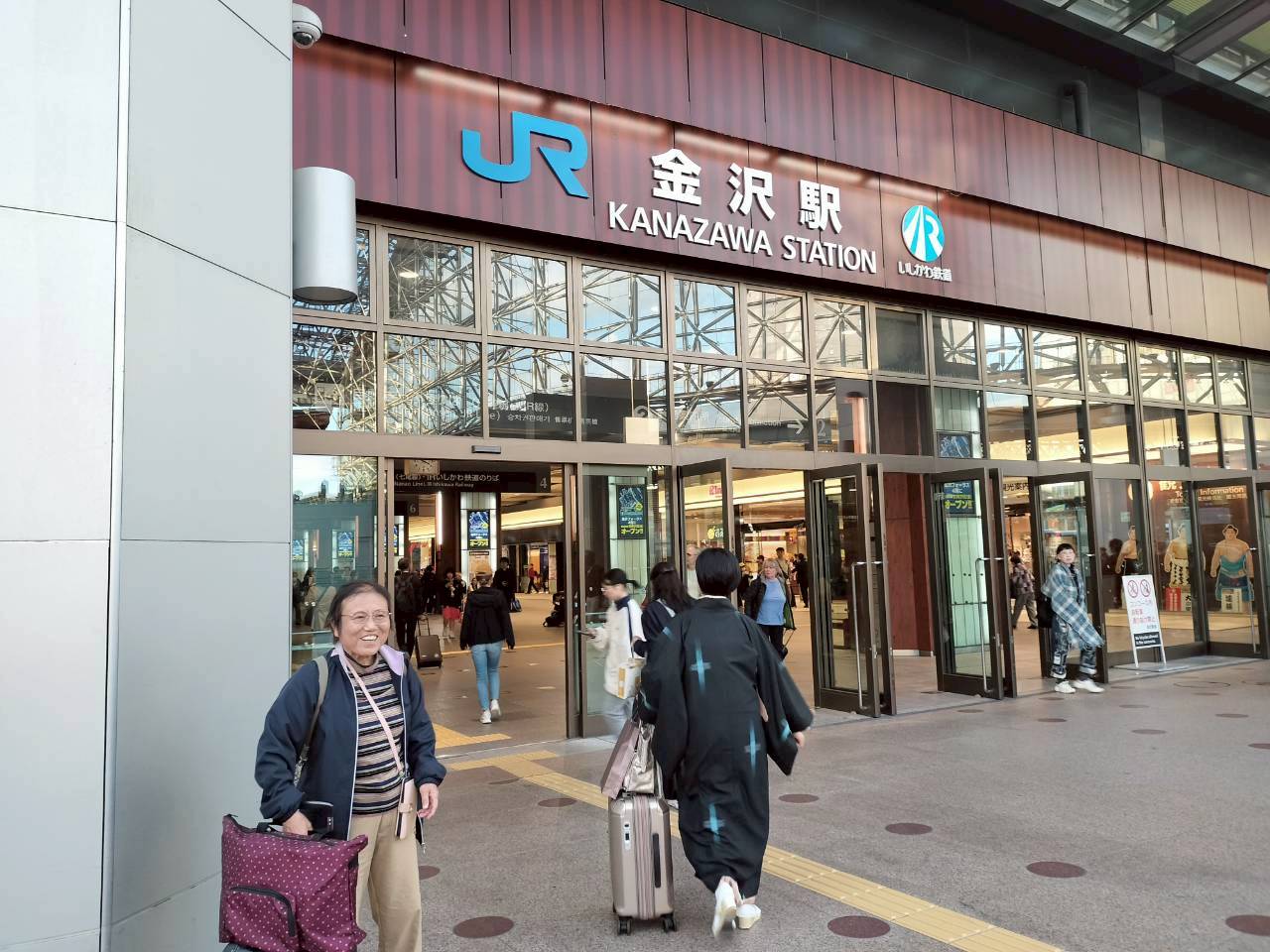
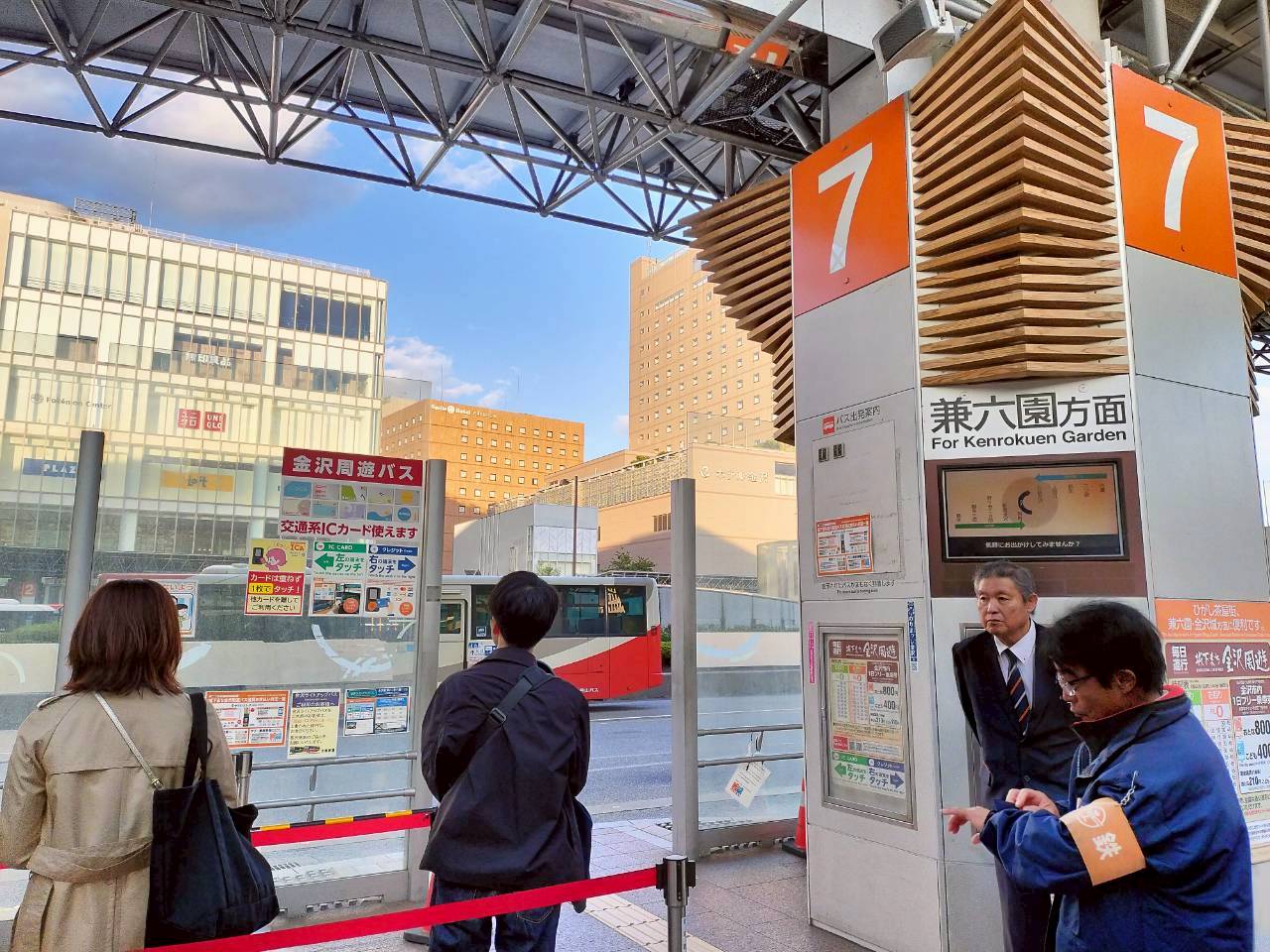
After exiting the East Exit of Kanazawa Station, you will see a bus terminal directly in front of you.
-
Board a bus bound for Kenrokuen Area
(Bus Stop No. 7) -
Get off at “Kenrokuen-shita / Kanazawa Castle”
-
Travel time: About 10–15 minutes
-
Fare: ¥210 (one way, adult)
-
Frequency: About 3–4 buses per hour
(every 15–20 minutes)
Bus service is frequent and convenient, making it an easy option for sightseeing.
Kenrokuen Garden and Kanazawa Castle Park are located very close to each other, so visiting both together is highly recommended.
On Foot
If you have plenty of time, walking is also a pleasant option.
The area around Kanazawa Station has local markets and many good restaurants, so you can enjoy Kanazawa’s food culture along the way.
-
Walking time: About 25 minutes
What Is Kanazawa Castle?
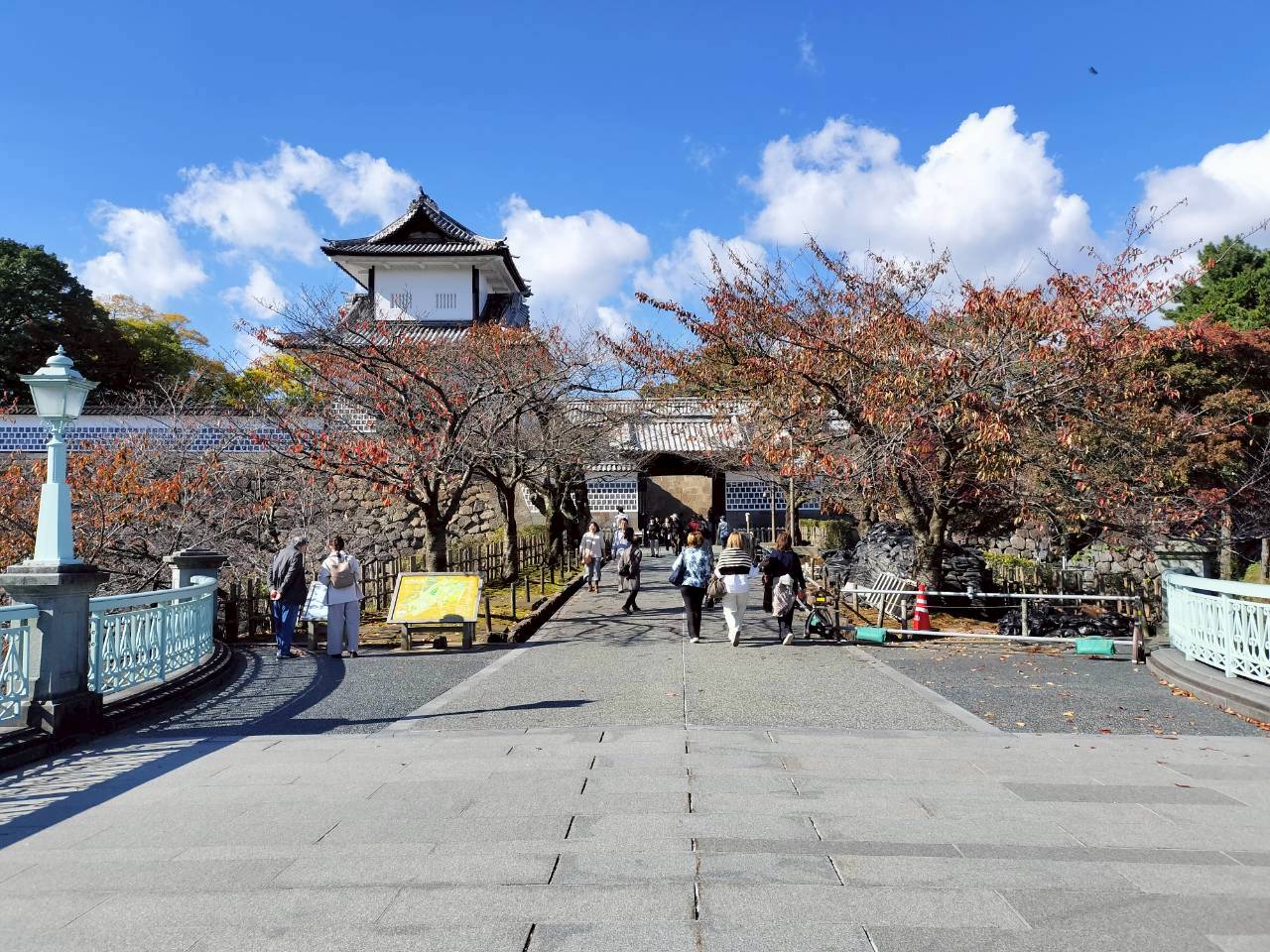
Kanazawa Castle was once the main residence of the Maeda family, who ruled the Kaga Domain, an area covering much of present-day Ishikawa and Toyama Prefectures.
Today, the site is maintained as Kanazawa Castle Park, where visitors can see stone walls, gates, and reconstructed castle buildings.
Within the park, many original castle features such as stone walls, gates, and yagura (watchtowers) remain. Walking through the grounds allows visitors to experience the atmosphere of a traditional Japanese castle site.
The Kaga Domain was known as “Kaga Hyakumangoku”, meaning it produced an exceptionally large amount of rice and was one of the wealthiest regions of Japan at the time. In that era, a domain’s power was measured by rice production, and Hyakumangoku refers to enough rice to feed one million people for a year.
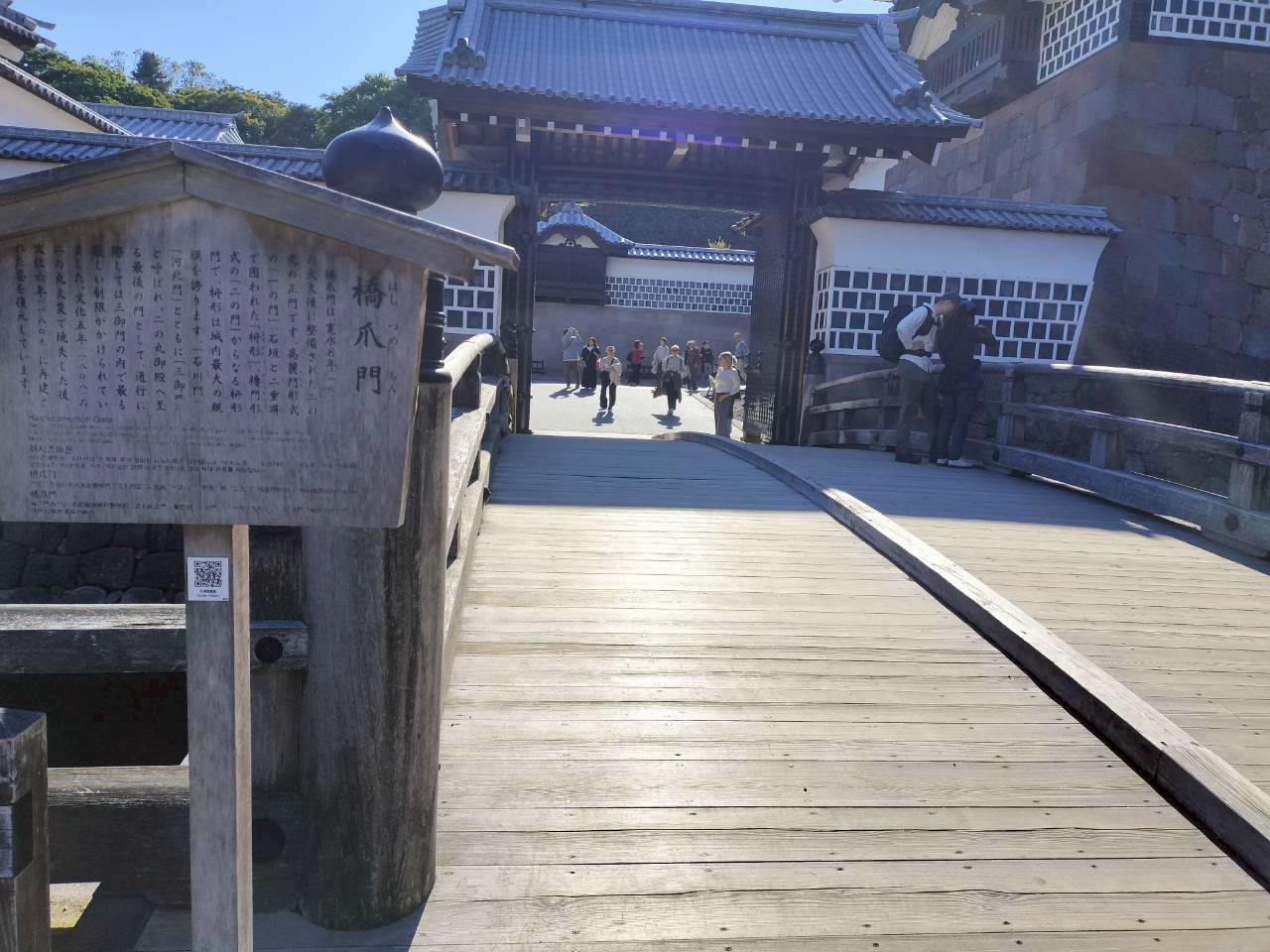
Please note that Kanazawa Castle no longer has a main keep (tenshu). Instead, buildings such as Hishi Yagura, Gojukken Nagaya, and Hashizume-mon Gate have been carefully reconstructed, and visitors can walk inside these structures to explore their interiors.
History of Kanazawa Castle
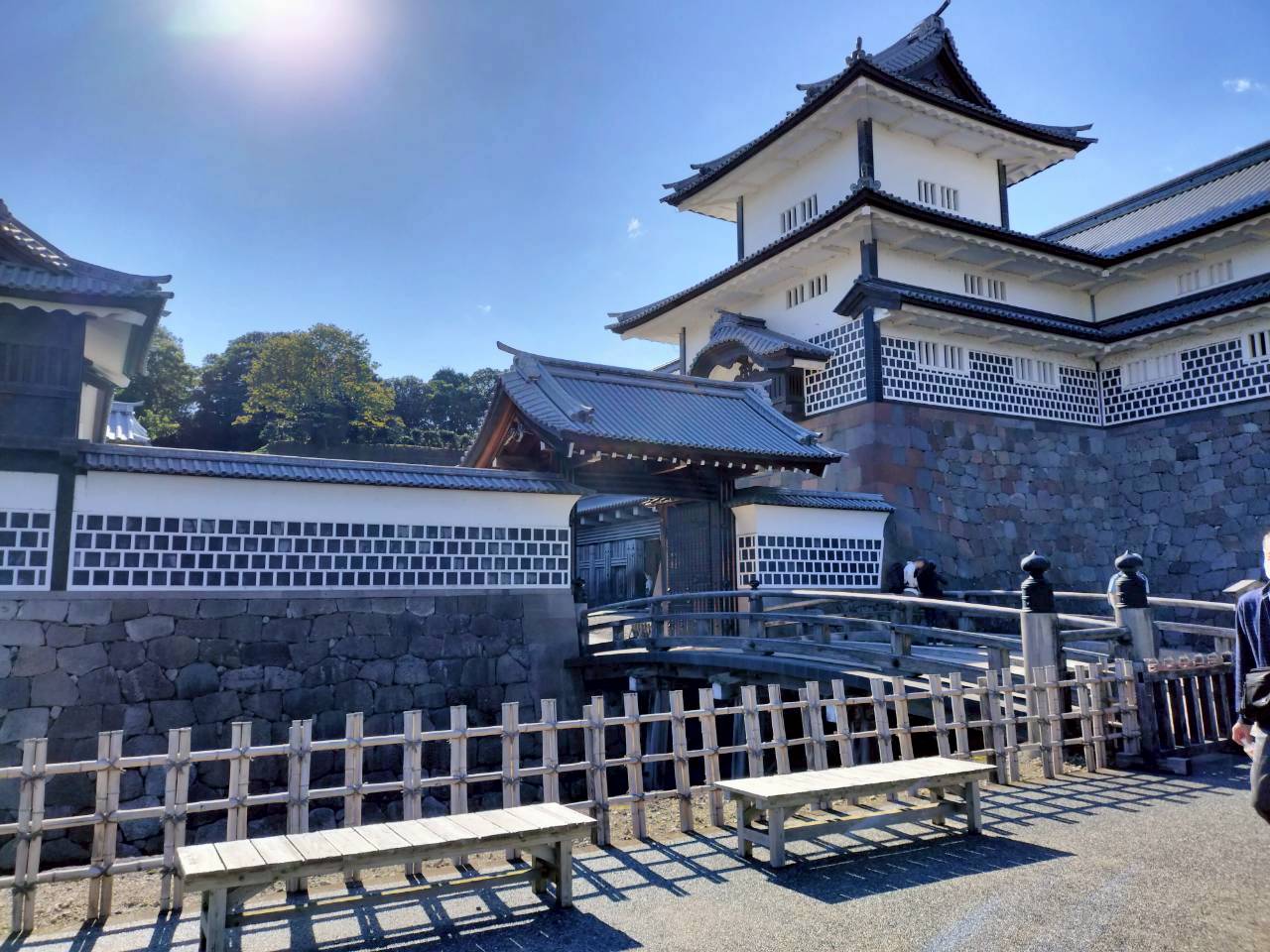
Kanazawa Castle served as the political center of the Kaga Domain from the early 1600s until around the 1800s.
The domain covered most of present-day Ishikawa Prefecture and a large part of Toyama Prefecture.
Before the castle was built, this site was home to a temple known as Kanazawa Gobo, which functioned as the base of a powerful religious group.
In 1583, Maeda Toshiie took control of the area, and Kanazawa Castle was constructed on the former temple site.
After that, the Maeda family ruled the Kaga Domain for approximately 280 years, with Kanazawa as its center.
Kanazawa Castle was destroyed by fire many times throughout its history and rebuilt on each occasion.
The buildings that visitors can walk inside today were reconstructed in the 2000s, based on historical records and traditional construction methods.
What Can You See Inside Kanazawa Castle?
Kanazawa Castle no longer has a main keep, but there is still plenty to see.
Reconstructed buildings such as Hishi Yagura and Gojukken Nagaya remain, making the site well worth a visit.
In particular, Gojukken Nagaya is open to the public, allowing visitors to walk inside and experience the atmosphere of a traditional Japanese castle from the inside.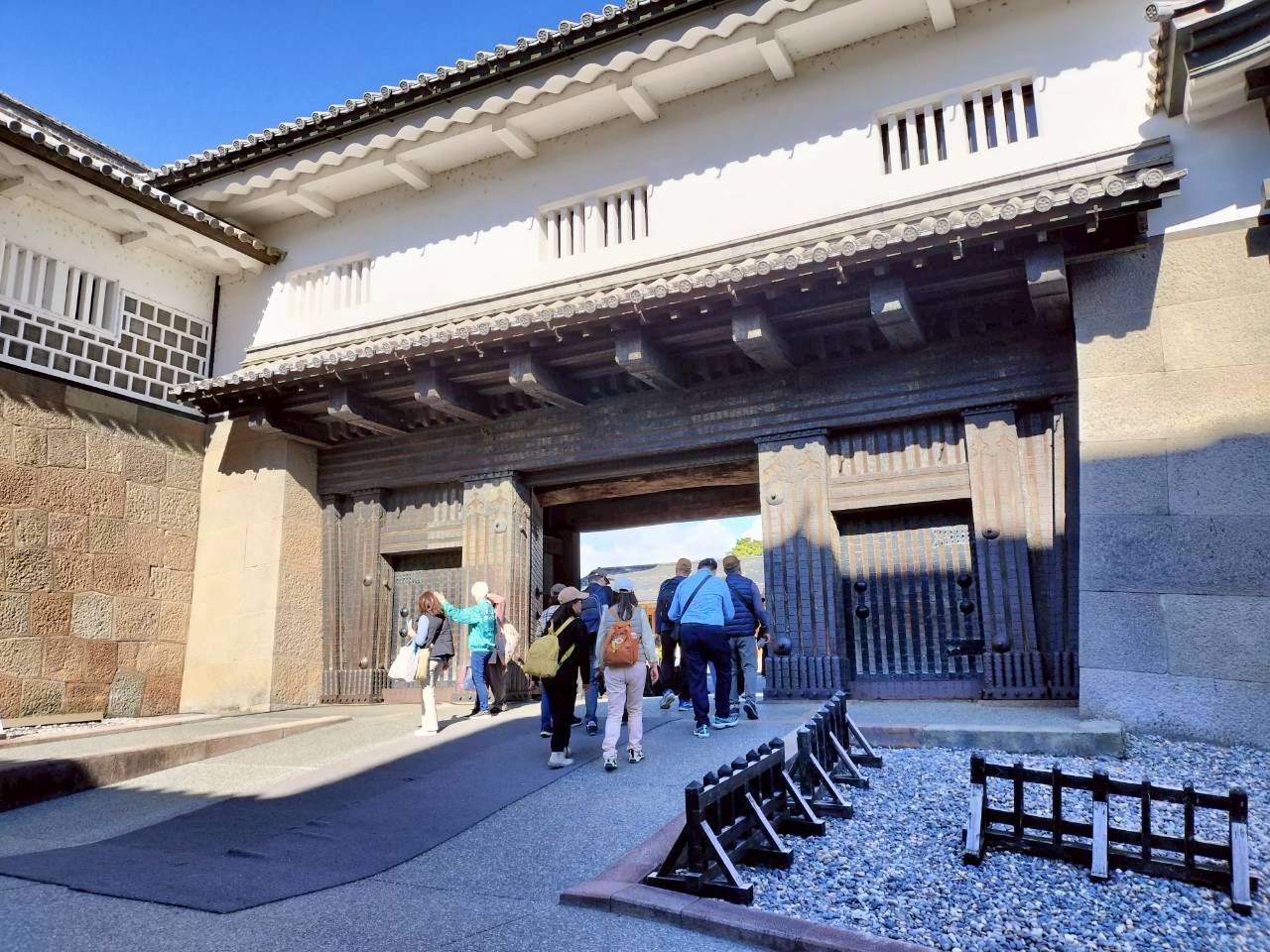
The castle grounds are very spacious, so even a short walk feels refreshing.
Compared to nearby Kenrokuen Garden, the area is generally less crowded, making it easy to explore at a relaxed pace.
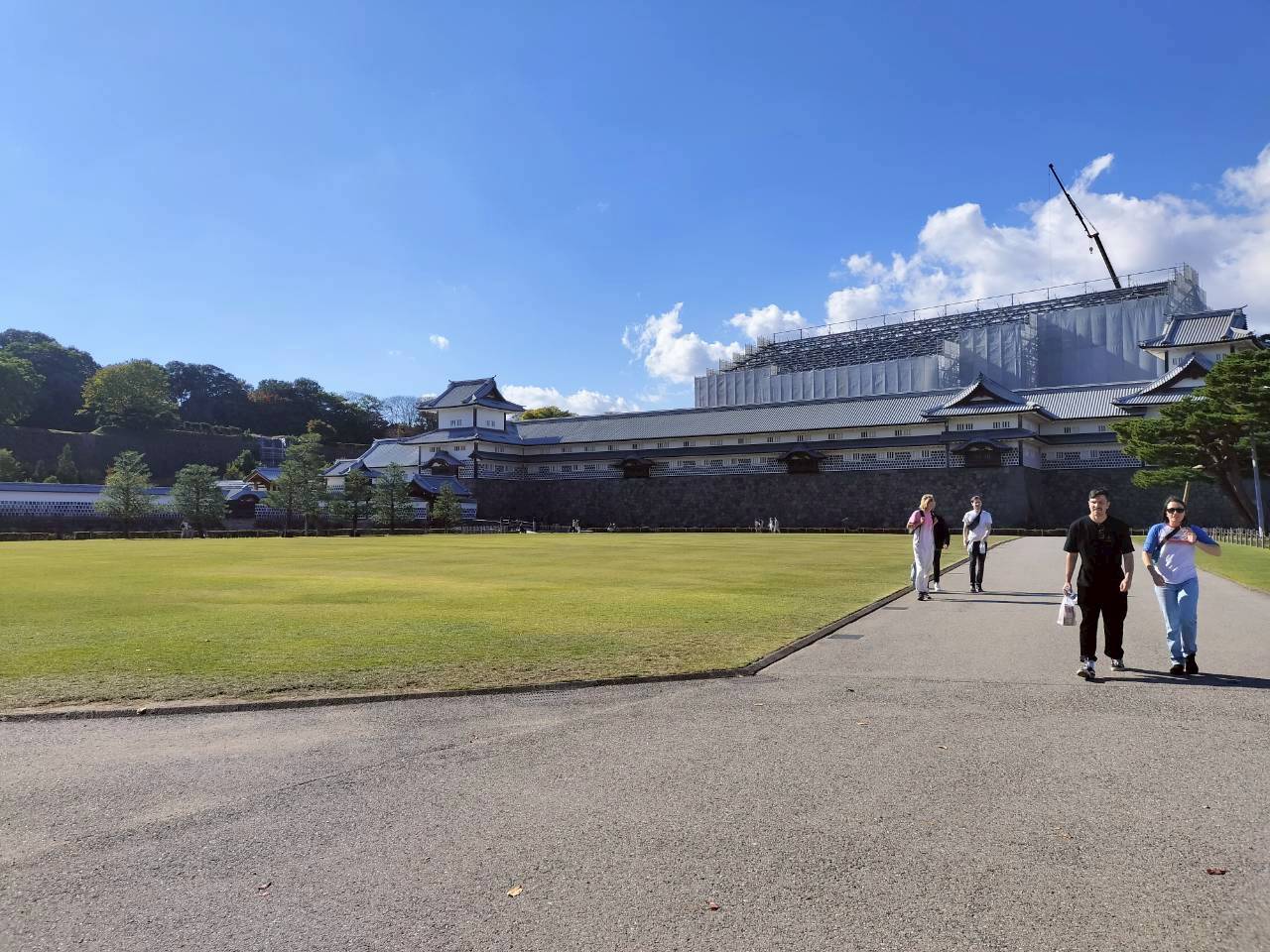 The park itself is large and open, ideal for strolling.
 Whether you are a castle enthusiast or simply curious about Japanese history, walking through Kanazawa Castle offers a chance to feel the depth and character of Japan’s past.
 Kanazawa Castle is one of the city’s most representative landmarks, where history and atmosphere can be enjoyed simply by walking through the grounds.
Opening Hours and Admission Fees
Opening Hours
-
9:00 AM – 4:30 PM
(Last admission at 4:00 PM)
Admission Fees
Combined ticket for the following buildings:
Hishi Yagura, Gojukken Nagaya, Hashizume-mon Tsuzuki Yagura, and Hashizume-mon Gate
-
Adults (18 years and over): ¥320
-
Children (6–17 years): ¥100
-
Children under 6: Free
Free Areas
-
All other areas are free of charge
-
Admission to Kanazawa Castle Park itself is free
This article is based on information available as of November 7, 2025.